Source Modern Adjustable Coffee Table for Living Room, Hotel, Cafe
Explore 30 listings for the modern adjustable coffee table suitable for living rooms, hotels, and cafes. Buyers can compare prices, delivery times, and customization options like KD assembly and panel materials to find the best fit for dining rooms or home use.
Key considerations
Products List




Comprehensive Sourcing Guide
Strategic Sourcing Guide for Modern Adjustable Coffee Tables
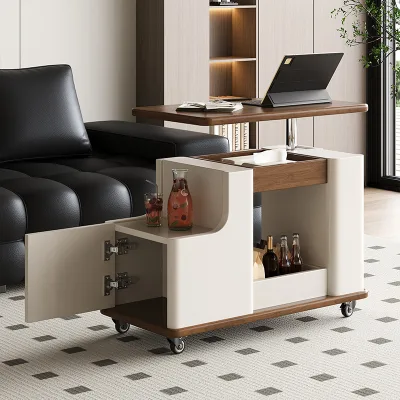
The global market for modern adjustable coffee tables has expanded significantly as residential and commercial spaces prioritize multifunctional furniture that maximizes utility without compromising aesthetic appeal. For procurement professionals, sourcing these items requires a nuanced understanding of material composition, mechanical adjustability, and supply chain logistics. The term "modern" in this context typically denotes clean lines, minimalist profiles, and the integration of functional mechanisms such as lifting tops or sliding panels. Buyers must navigate a landscape where product attributes vary widely, from fixed wooden structures to complex metal-and-panel hybrids. This guide provides a disciplined framework for evaluating suppliers, verifying technical specifications, and managing procurement risks associated with modern adjustable coffee tables.
Technical Specifications and Material Composition
The foundation of any successful procurement strategy lies in the precise definition of technical specifications. When sourcing modern adjustable coffee tables, the material composition is the primary differentiator. Observed market data indicates a divergence in material choices, ranging from solid wood and wooden panels to metal frames and composite panels. For instance, some listings specify "Wood" as the primary material, while others detail a hybrid construction of "Panel+Steel" or "Metal." This variation directly impacts the table's durability, weight capacity, and aesthetic finish.
The mechanical functionality of the adjustable feature is equally critical. The market offers both "Folded" and "Unfolded" configurations, suggesting that the adjustment mechanism may involve folding legs or sliding surfaces. Specific product models, such as those designated with codes like "CC059-10" or "RY-CT062," often come with distinct dimensional standards. Buyers must verify the exact dimensions, as observed ranges include specific measurements like "985055 CM" or larger configurations up to "1809075cm." The "Height: Customizable" attribute highlights a key trend where manufacturers offer adjustable heights to suit different user needs, particularly in dining rooms, kitchens, and cafes.
Furthermore, the structural integrity of the adjustment mechanism must be scrutinized. Attributes such as "Rotary: Fixed" versus adjustable rotary mechanisms indicate the type of movement allowed. Some products feature "KD" (Knock-Down) assembly, which is essential for efficient shipping and flat-pack logistics. The presence of "KD: Yes" or "KD: Kd" suggests that the table is designed for disassembly, a standard practice for international trade to minimize volumetric weight. Procurement teams should request detailed engineering drawings to confirm the tolerance levels of the sliding or lifting mechanisms, ensuring they operate smoothly over thousands of cycles without jamming or structural failure.
Compliance, Certification, and Safety Standards
While specific certification status for every product in the market is not universally guaranteed, compliance with safety and quality standards is non-negotiable for B2B buyers. The furniture industry is subject to various regional regulations regarding fire resistance, formaldehyde emissions, and structural stability. Although some background data mentions "CE" as a potential certification, buyers should not assume this applies to all listed products without explicit verification from the supplier.
When evaluating a potential supplier, procurement officers must demand evidence of compliance with relevant international standards. For wooden products, this often involves testing for formaldehyde release levels (such as E1 or E0 standards) to ensure indoor air quality. For metal and panel hybrids, structural load testing is essential to verify that the adjustable mechanism can support the intended weight without collapsing. The observed "prod_standard" values, such as "18kg" or "2kg," likely refer to weight capacities or specific product weights, but these figures must be validated against actual load-bearing tests rather than accepted as absolute claims.
Buyers should also consider the environmental impact of the materials used. The shift toward "Panel" and "Wooden" materials often involves the use of adhesives and finishes that must meet strict VOC (Volatile Organic Compounds) regulations. In the European and North American markets, compliance with CARB (California Air Resources Board) Phase 2 or similar directives is often required. Suppliers who can provide third-party laboratory test reports demonstrating adherence to these standards offer a lower risk profile. It is crucial to note that "CE" certification, while mentioned in background contexts, is a specific regulatory mark for the European Economic Area and does not automatically apply to products destined for other regions.
Cost Drivers and Pricing Dynamics
Understanding the cost drivers for modern adjustable coffee tables is essential for budgeting and negotiation. The observed price range in the market spans from $1 to $569.99, a wide variance that reflects differences in material quality, complexity of the adjustment mechanism, and brand positioning. Several factors influence the final unit cost. First, the material composition plays a significant role; tables constructed from solid wood or high-grade steel typically command higher prices than those using composite panels or standard metal alloys.
Second, the level of customization is a major cost determinant. The market data indicates that "Customization: Available" and "OEM: Welcome" are common attributes. Suppliers offering custom colors, such as "Yellow" or "Black," or bespoke dimensions like "1809075cm" will incur higher tooling and setup costs. The "Customized" attribute appears in conflicting forms (e.g., "Customized" vs. "Non-Customized"), suggesting that buyers must clearly define their requirements to avoid ambiguity in pricing. Custom finishes, special packaging, and unique branding on the product itself will add to the unit price.
Third, order volume and logistics impact the cost structure. The Minimum Order Quantity (MOQ) varies significantly, with observed ranges from 1 to 500 units, and specific listings citing "100PCS/Color" or "300PCS." Higher MOQs generally result in lower per-unit costs due to economies of scale in production and shipping. However, smaller orders may be necessary for testing new designs or for boutique retailers. Additionally, the "Delivery Time" of 25-35 days or 35-40 days affects the total cost of ownership, as longer lead times may require higher inventory holding costs or expedited shipping fees if deadlines are tight.
Typical Applications and Functional Versatility
Modern adjustable coffee tables are designed to serve a diverse range of applications, from residential living rooms to commercial hospitality spaces. The observed "Function" attributes highlight usage in "Living Room Coffee Shop" and "Home Dining Room" settings. This versatility makes them attractive to a broad spectrum of buyers, including interior designers, hotel procurement managers, and furniture retailers.
In residential contexts, the primary value proposition is space efficiency. The ability to adjust height or transform the surface from a coffee table to a dining table allows homeowners to maximize the utility of smaller living areas. The "Usage" attributes listing "Hotel, Home" confirm that these products are suitable for both private and public environments. In commercial settings such as hotels, cafes, and restaurants, the durability and ease of maintenance are paramount. The "Without Armrest" design and "Rectangle" shape facilitate easy movement and stacking, which is beneficial for high-traffic areas where furniture needs to be rearranged frequently.
The "Purpose" of these tables often extends to "Dining Rooms, Kitchens, Restaurants, and Cafes," indicating their adaptability to different room layouts. The "Wood Style: Panel" and "Modern" aesthetic ensure that they blend seamlessly with contemporary interior design trends. Buyers should consider the specific needs of their end-users when selecting a model. For instance, a hotel requiring tables that can be quickly adjusted for different dining configurations might prioritize the "Adjustable Panel" feature, while a residential buyer might focus on the aesthetic finish and color options like "Yellow" or "Black."
Supplier Evaluation and Quality Control Protocols
Selecting the right supplier is a critical step in the procurement process. The market data indicates that suppliers are located primarily in "China," with specific origins noted as "Weifang, China." While this provides a geographical context, buyers must conduct thorough due diligence beyond location. Key evaluation criteria include the supplier's production capacity, quality control systems, and ability to meet customization requests.
Quality control should be integrated into every stage of the procurement cycle. Buyers should verify that the supplier adheres to strict production standards, particularly regarding the "prod_packing" methods, which range from "1PCS/CTN" to "Standard Packing" and "Box." Proper packaging is essential to prevent damage during transit, especially for tables with delicate adjustable mechanisms. The "Sample: Accept" attribute suggests that suppliers are willing to provide pre-production samples, which is a vital step for verifying quality before committing to a large order.
Buyers should also assess the supplier's responsiveness to "OEM" requests and their ability to handle "Customized" orders. The "Payment" terms, such as "T/T, 30% and 70%," are standard in the industry, but buyers must ensure that the payment schedule aligns with their cash flow and risk management strategies. Additionally, the "Delivery Time" of 25-35 days or 35-40 days after receiving the deposit must be factored into the supply chain timeline. Suppliers who consistently meet these deadlines and provide accurate tracking information are more reliable partners.
Long-Term Procurement Considerations and Logistics
Long-term success in sourcing modern adjustable coffee tables depends on building a resilient supply chain. The "Lead Time" of 25-35 days or 35-40 days is a significant factor that buyers must account for in their inventory planning. Variations in lead times can occur due to raw material shortages, production bottlenecks, or logistical disruptions. To mitigate these risks, buyers should maintain open communication with suppliers and establish contingency plans for potential delays.
The "MOQ" of 100PCS/Color or 300PCS may pose challenges for smaller buyers or those testing new product lines. In such cases, buyers might need to negotiate lower MOQs or collaborate with other retailers to consolidate orders. The "prod_model" codes, such as "CC059-10" or "Yamazon-P048," serve as unique identifiers that help in tracking product variations and ensuring consistency across orders.
Sustainability is another long-term consideration. As environmental regulations tighten, buyers should prioritize suppliers who use sustainable materials and eco-friendly manufacturing processes. The "Material" attributes, including "Wood," "Metal," and "Panel," should be sourced from suppliers who can demonstrate responsible forestry practices and ethical labor standards. Finally, the "Standard Packing" and "Carton" options should be evaluated for their recyclability and environmental impact, aligning with the growing demand for sustainable packaging solutions.
Comparative Analysis of Product Attributes
To facilitate decision-making, the following table summarizes key attributes observed in the market for modern adjustable coffee tables. This comparison highlights the variability in specifications and helps buyers identify the most suitable options for their specific needs.
| Attribute | Observation A | Observation B | Observation C |
|---|---|---|---|
| Material | Wood | Panel+Steel | Metal |
| Style | Modern | Modern | Modern |
| Shape | Rectangle | Rectangle | Rectangle |
| Color | Yellow | Black | Optional |
| Adjustment | Folded/Unfolded | Adjustable Panel | Height Customizable |
| MOQ | 100PCS/Color | 300PCS | 1-500 (Variable) |
| Lead Time | 25-35 Days | 35-40 Days | 35-40 Days |
| Origin | China | Weifang, China | China |
| Packing | 1PCS/CTN | Standard Packing | Box |
| Usage | Hotel, Home | Dining Room | Living Room, Cafe |
This table underscores the importance of precise specification matching. While all listed products share a "Modern" style and "Rectangle" shape, the material composition and adjustment mechanisms vary significantly. Buyers must align these attributes with their specific application requirements to ensure the selected product meets both functional and aesthetic expectations.
In conclusion, sourcing modern adjustable coffee tables requires a meticulous approach that balances technical specifications, cost considerations, and supplier reliability. By adhering to the guidelines outlined in this guide, procurement professionals can navigate the complexities of the market and secure high-quality products that meet the evolving demands of residential and commercial spaces.
FAQs
Can I customize the color of the modern adjustable coffee table?
Yes, customization is available for colors such as yellow, black, or optional shades. Suppliers typically accept OEM requests and can produce custom finishes upon deposit, though minimum order quantities may apply depending on the specific model selected.
What is the typical delivery time for these tables?
Delivery times generally range from 25 to 40 days after receiving the deposit. Specific lead times vary by manufacturer, with some listing 25-35 days and others 35-40 days, depending on production capacity and order volume.
Which materials are commonly used for modern adjustable coffee tables?
Common materials include wood, panel, steel, and metal combinations. Some models feature a panel and steel hybrid construction, while others are made entirely of wood or metal, offering different durability and aesthetic profiles for various settings.
What are the standard minimum order quantities for these products?
Minimum order quantities typically range from 100 to 300 pieces per color. Specific listings may require 100 pieces per color or 300 pieces total, so buyers must verify the MOQ with the supplier before placing an order.
How are these tables packed for international shipping?
Packing options include one piece per carton, standard packing, or box packaging. The specific method depends on the model, with some using 1PCS/CTN while others utilize standard carton or box packaging to ensure safe transit.
Can the height of the table be adjusted or customized?
Yes, the height is often customizable to suit different user needs. Some models feature adjustable panels or mechanisms, allowing the table to transform from a coffee table to a dining table in living rooms or dining areas.